









Exhaust fans, airflow paths and motor protection for healthier UAE buildings
ARICOL ELECTRICALS • UAE SAFETY AWARENESS
A FAN THAT SPINS MAY NOT VENTILATE
Exhaust fans, airflow paths and motor protection for healthier UAE buildings
FANS & VENTILATION • 8-minute read • General UAE Awareness
KEY TAKEAWAY
Ventilation performance is a complete path: air must enter, move through the occupied space, pass the grille and duct, and discharge safely outdoors. A clean fan with the wrong route—or a blocked duct with a running motor—may move far less air than occupants expect.
Why Airflow Matters
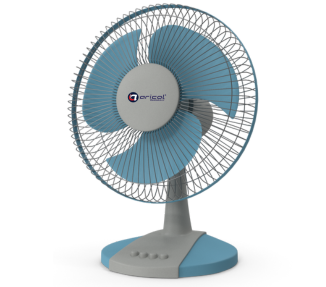
Exhaust systems help remove heat, moisture, odours and locally generated contaminants from bathrooms, kitchens, utility rooms, workshops and commercial spaces. They also support comfort and can help protect finishes and equipment from persistent humidity. But a small domestic fan, an industrial exhaust fan, a duct fan and a smoke-control system are not interchangeable products.
Dubai Municipality’s Green Building Regulations require suitable ventilation, appropriate separation of pollutant sources and discharge arrangements that avoid drawing exhausted air back into the building. They also call for inspection and cleaning of HVAC equipment by qualified parties. Project-specific design and authority requirements remain essential.
The Full Airflow Path
A competent design considers the room volume and use, target airflow, make-up air, grille resistance, duct length and bends, backdraft prevention, discharge location, noise, access for cleaning and the fan’s performance at the actual system pressure. If a room is tightly sealed, even a powerful fan can struggle because replacement air cannot enter.
Discharging moist or contaminated air into a ceiling void can transfer the problem rather than solve it. Exhaust should terminate at an approved external location positioned to avoid re-entry through windows, doors or air intakes and to avoid nuisance to neighbours and pedestrians.
Signs That Performance Has Deteriorated
Slow clearing of steam or odours, persistent condensation, unusual noise, vibration, rattling, a hot motor smell, reduced suction at the grille, frequent protective-device operation, backflow when the fan is off, and visible dust or grease accumulation all justify maintenance or investigation.
Do not place hands or tools near moving blades. Isolate the equipment by the approved method before cleaning or service. In commercial systems, grease, dust and access constraints may require specialist maintenance and fire-safety controls.
Features And Selection Factors
- Airflow and pressure performance appropriate to the complete duct system—not free-air appearance alone.
- Motor and electrical rating suitable for the supply, duty cycle, temperature and environment.
- Correct overload, short-circuit and other motor protection as required by the applicable design and regulations.
- Ingress protection, corrosion resistance and materials suitable for humidity, dust, grease or outdoor exposure.
- Low-noise design, guards, shutters or dampers where required, and safe access for cleaning.
- Controls such as timers, humidity sensors or interlocks only where properly designed for the use.
Benefits And Advantages
- More dependable removal of moisture, odour and internally generated heat.
- Better indoor-air management and reduced risk of re-circulating contaminants.
- Longer motor life through correct loading, protection and maintenance.
- Lower noise and energy waste from an appropriately selected system.
- Simpler cleaning and fewer unplanned shutdowns.
ARICOL SAFETY INSIGHT — TEST THE RESULT, NOT THE SOUND
A loud fan can create the impression of strong ventilation while a blocked grille, closed damper or restrictive duct delivers poor airflow. Facilities teams should verify the outcome at the grille or discharge with an appropriate method and compare it with the design requirement. Noise is not a performance certificate.
A Maintenance-Minded Checklist
- Keep grilles and accessible filters clean according to manufacturer guidance.
- Check that the external discharge remains clear and does not feed an air intake.
- Record noise, vibration and moisture complaints rather than treating them as cosmetic issues.
- Use qualified technicians for electrical isolation, motor checks, duct inspection and airflow measurement.
- Replace equipment only with a properly selected equivalent—not merely the same visible size.
QUALITY ABOVE ALL
Select responsibly. Install professionally. Maintain deliberately.
Official and Company References
Always verify the latest version and the authority applicable to the property or project.
IMPORTANT UAE AWARENESS NOTE
This article is provided by Aricol Electricals L.L.C. for general public awareness only. It is not a substitute for project-specific design, inspection, testing, installation, maintenance, legal advice or approval by DEWA, the Abu Dhabi Department of Energy, Dubai Municipality, Dubai Civil Defence, MoIAT or any other competent UAE authority. Requirements vary by emirate, building type, occupancy, product and installation. Electrical work must be carried out by appropriately licensed or approved competent professionals using products suitable for the application and compliant with current UAE requirements and manufacturer instructions. If an electrical emergency is suspected, keep people away, isolate power only when it is safe to do so, and contact the relevant emergency, utility or building management service. Regulations and technical requirements can change; verify the latest official requirements before acting.